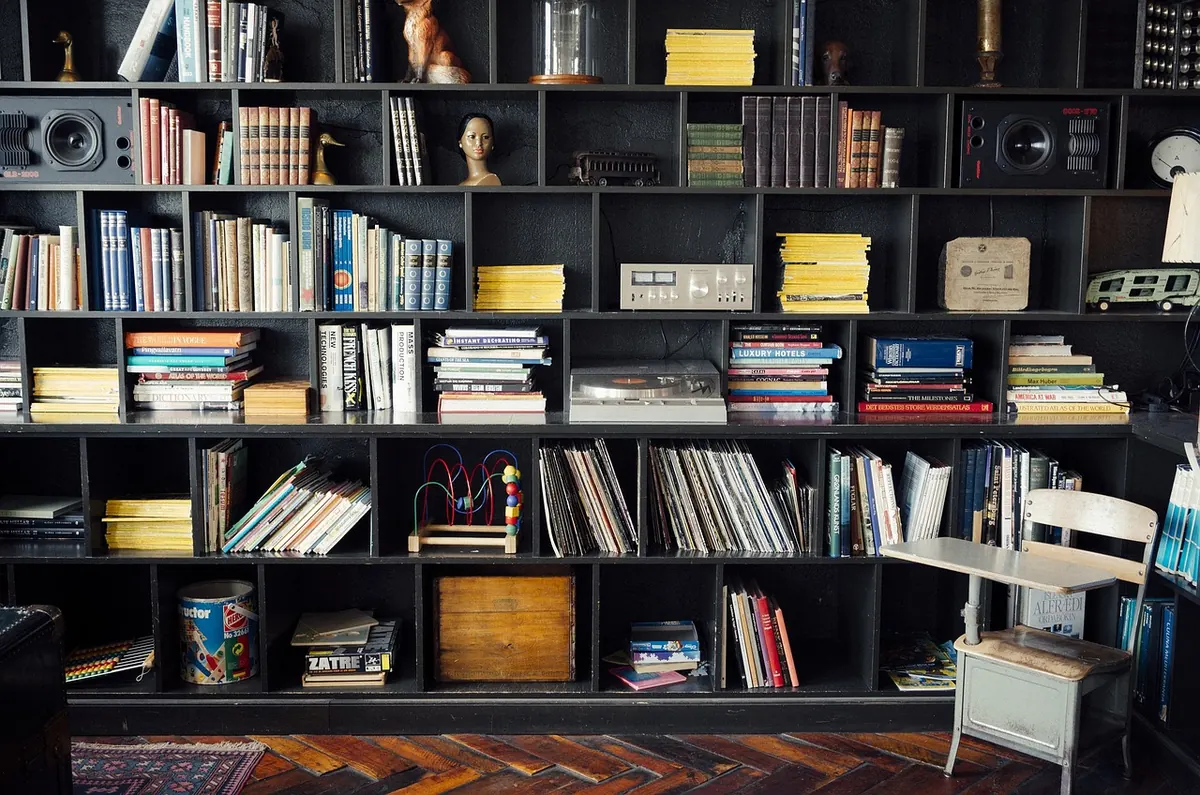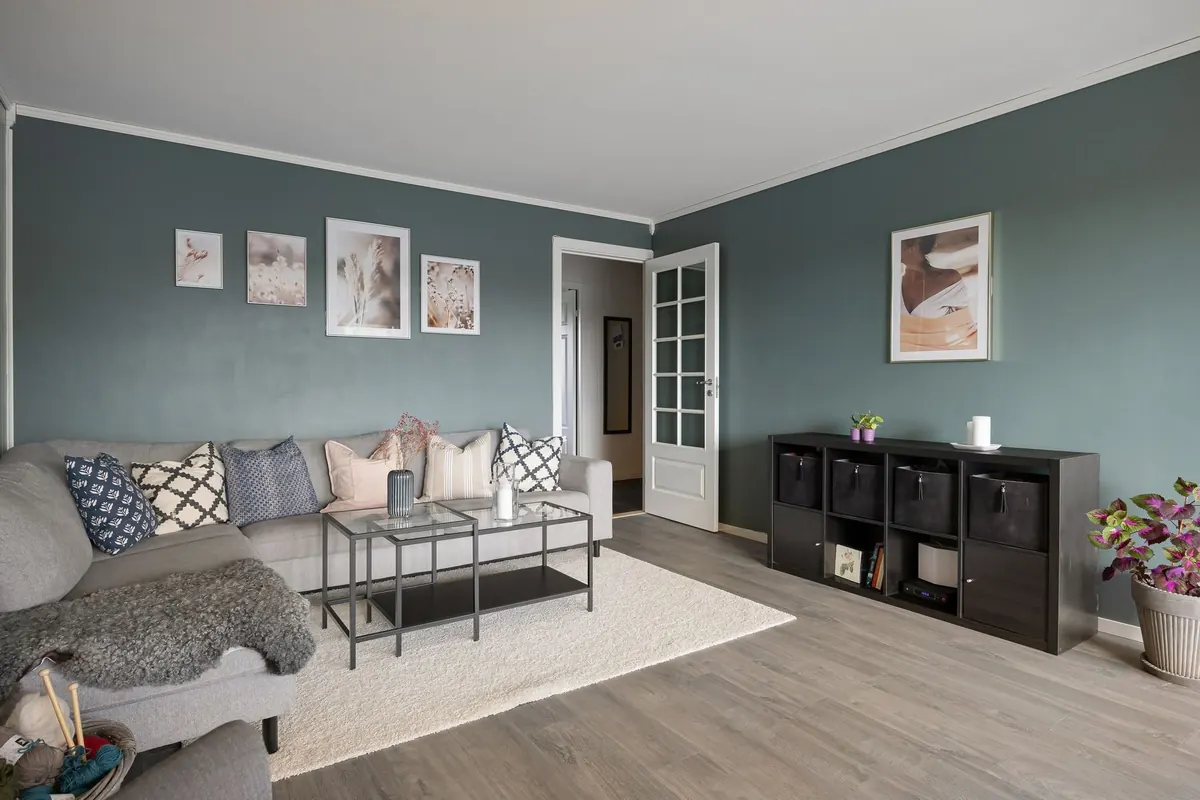
A shelf only earns its place if it fits what you already own. Walk through any homeware shop and the storage units on offer fall into three broad families: cube systems, ladder shelves and open shelving. Photographed side by side, they can look interchangeable. Loaded up at home, they behave completely differently. Cube units swallow clutter inside baskets, ladder shelves lean into awkward corners, and open shelving puts everything on display. What follows is a practical comparison: what each style holds well, where it suits a room, and what you are actually paying for when you commit a wall to it.
Cube storage: the modular workhorse
Cube units are built on a repeating square, usually somewhere between 30cm and 40cm across, and sold in grids: 2x2, 2x4, 4x4, or a low 1x8 bench height. That module is the whole point. Buy one unit and every insert sold beside it fits. Buy a second a year later and it will stack or sit alongside, provided the range is still current — check that before you plan a long run of them, because ranges do get discontinued.
What cubes hold well:
- Folded clothing, paired with baskets or fabric drawers
- Books, records, box files and magazines
- Shoes, bags and sports kit in a hallway
- Toys, craft supplies, board games and cables
What they handle badly is anything taller than the opening or heavier than the shelf rating. Most cube shelving is rated somewhere in the region of 10kg to 15kg per cubby, but that figure varies by manufacturer, so check the spec rather than guessing. The other thing to plan for is fixing: these units are top-heavy once loaded and should be strapped to the wall, particularly above waist height or in a room children use.
Ladder shelving: for tight and awkward spots
A ladder shelf leans back against the wall, wide at the bottom and progressively narrower as it rises. Structurally it is a triangle with shelves through it, which is exactly why it fits where a bookcase will not: the sliver beside a chimney breast, the gap next to a desk, a narrow bathroom wall, a rented hallway where drilling is limited.
Gravity and the wall fixing do the work here, so load it thoughtfully. The lower shelves are wider and more stable and should carry the heavy items — books, jars, a stack of towels. The top shelf is small and high; keep it to a plant or a framed picture. Most ladder units come with a strap or bracket for securing the top, and if yours does not, fit one. It is also a poor choice in a busy corridor where it can be knocked, or anywhere a toddler might use the rungs as a climbing frame.
Open shelving: display, dust and discipline
Wall-mounted shelves — bracket, floating or fitted into an alcove — give you the most freedom and the least forgiveness. Everything on them is visible, so packaging, colour and clutter all count towards how the room feels. In a kitchen that is a virtue: daily plates, mugs, glasses and jars within arm's reach, nothing hidden behind a door you have to open with wet hands. In a bathroom, open shelves work well for folded towels and bottles you use constantly. In a room storing things you would rather not look at, they are the wrong tool.
What to watch with open shelves
Brackets need to reach studs or use fixings suited to your wall — plasterboard on its own will not hold a shelf of hardbacks, and older lath-and-plaster walls need different anchors again. Floating shelves hide their fixings but generally take less weight than a visible bracket. Cheap shelves also bow: a stated weight limit assumes the load is spread evenly, not concentrated in one spot. And think about depth. Kitchen shelves at 20cm to 25cm take plates and jars but not a cereal box; if you are shelving a pantry, go deeper.
What it costs to fill a wall or a room
Exact prices shift with material, finish and retailer, so they are not worth quoting. What is worth knowing is what drives the number up. Material matters most: veneered particleboard sits at the budget end, painted MDF and metal in the middle, solid timber at the top. Named modular systems cost more than generic shelving because you are paying for guaranteed compatibility between components. Delivery, and whether you assemble it yourself or pay someone to, adds another layer.
Then come the costs people forget when they budget for the unit alone:
- Baskets, boxes and inserts — a sixteen-cube unit needs sixteen of them for a uniform look, and they can easily cost more than the frame
- Fixings rated for your specific wall type
- Delivery, and assembly if you would rather not spend a Saturday with an Allen key
- Matching jars and containers to make open shelving look calm rather than chaotic
- Replacement shelves if a ladder unit's top tier gets overloaded
Roughly speaking, open shelving is the cheapest way to cover a wall, cube systems sit in the middle once you add inserts, and ladder shelves give you the least shelf area for your money because they are a short, tapering run. Ladder shelves win on footprint, not on capacity.
Measure the room, then measure your things
Before ordering anything, note the wall length, the height of your skirting boards and how far they stand proud, the ceiling height, and whether the top shelf is genuinely reachable without a stool. Check what swings into the space: doors, drawers, oven doors, cupboard handles. Mark radiators, sockets and light switches. Then mark the proposed footprint on the floor with masking tape and leave it there for a day.
Next, measure your tallest and bulkiest items — a box file, a slow cooker, a folded duvet — and compare them to the internal opening of the unit, not the external dimensions quoted online. The difference between the two is where most returns come from.
A short way to decide
Three questions settle most of it. Do you want to see what is stored, or hide it? Is floor and wall space tight? Is the load heavy?
If you want things hidden and have a reasonable wall, a cube system with baskets is the tidiest answer. If space is tight and the load is light, a ladder shelf will fit where nothing else will. If the contents are heavy, choose open shelving on proper brackets, or a low cube unit that keeps the weight near the floor. And buy one unit first, live with it for a month, then buy the second. Filling a whole room in a single order is how people end up with four storage units and nowhere left to sit.
Photo: Lisa Anna / Pexels